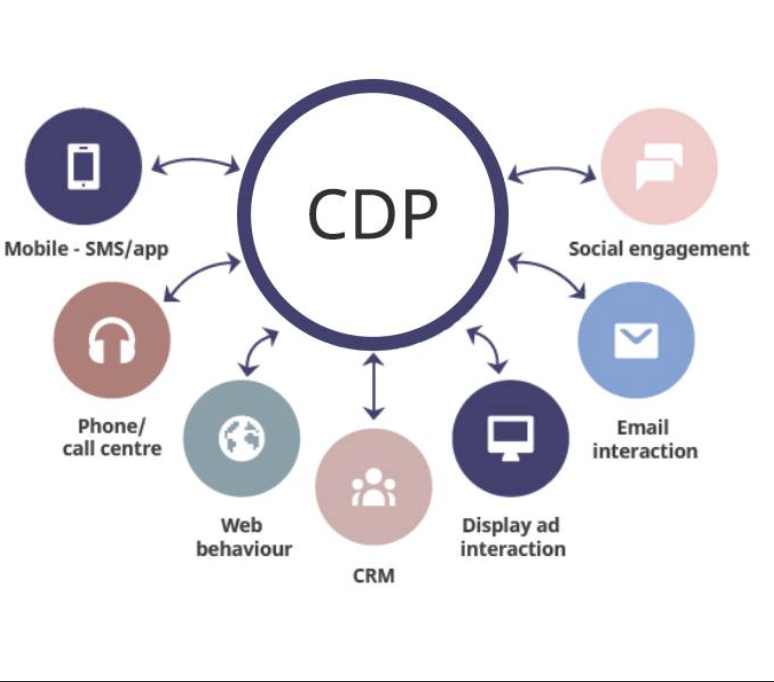
What is a Customer Data Platform?
A Customer Data Platform (CDP) is packaged software that creates a persistent, unified customer database accessible to other systems. CDPs collect data from multiple sources, clean and combine it into unified customer profiles, and make that data available for marketing, analytics, and customer experience use cases.
The key word is unified. Most organizations have customer data scattered across dozens of systems—your website, mobile app, CRM, email platform, support tools, and more. A CDP connects these silos to give you a complete view of each customer.
According to the CDP Institute, the average enterprise has customer data spread across 15+ different systems. A CDP unifies this data into a single, actionable customer view.
Core Capabilities of a CDP
1. Data Collection
CDPs ingest data from multiple sources including websites, mobile apps, servers, CRMs, email platforms, and third-party data. They typically offer SDKs, APIs, and pre-built connectors to make data collection straightforward.
2. Identity Resolution
This is where CDPs really shine. They stitch together data from anonymous browsing sessions, known user accounts, and multiple devices into unified customer profiles. When a visitor becomes a customer, all their historical behavior is connected.
3. Audience Segmentation
Build dynamic audiences based on any combination of customer attributes, behaviors, and engagement. These segments update in real-time as customer data changes.
4. Data Activation
CDPs send unified customer data and audiences to downstream tools—advertising platforms, email systems, personalization engines, analytics tools, and data warehouses. This is where the value of unified data gets realized.
CDP vs. DMP vs. CRM: What's the Difference?
| Feature | CDP | DMP | CRM |
|---|---|---|---|
| Data Type | First-party (primary) | Third-party (primary) | First-party only |
| Identity | Known + Anonymous | Anonymous (cookies) | Known only |
| Data Retention | Persistent (years) | Short-term (90 days) | Persistent |
| Primary Use | Personalization, analytics | Advertising targeting | Sales, support |
| Real-time | Yes | Limited | Limited |
Popular CDP Platforms
The CDP market has several leading players:
- Segment (Twilio) — Developer-friendly, strong integrations
- Adobe Real-Time CDP — Enterprise-grade, Adobe ecosystem
- Salesforce Data Cloud — Native Salesforce integration
- mParticle — Strong mobile capabilities
- Treasure Data — Enterprise, flexible data model
- Tealium AudienceStream — Tag management heritage
Do You Need a CDP?
A CDP might be right for your organization if you:
- Have customer data scattered across multiple disconnected systems
- Struggle to create a unified view of your customers
- Want to activate customer data in real-time across channels
- Need to improve personalization beyond basic segmentation
- Are preparing for a cookieless future with first-party data
- Have a development team that can implement tracking
You might NOT need a CDP if:
- Your tech stack is simple (just a website and email)
- You have limited customer data sources
- Your existing tools already integrate well
- You lack the resources to implement and maintain it
Start with clear use cases before choosing a CDP. Define what problems you're solving and what outcomes you expect. This helps you evaluate vendors and measure success.
Getting Started with Segment CDP
Segment (now part of Twilio) is one of the most popular CDPs, especially for product-led and digital-first companies. Here's why:
- Developer-friendly — Clean APIs and SDKs for web, mobile, and server
- Extensive integrations — 300+ pre-built destinations
- Tracking plan enforcement — Protocols ensure data quality
- Transparent pricing — Based on monthly tracked users
Summary
A Customer Data Platform unifies your scattered customer data into actionable profiles that power better marketing, analytics, and customer experiences. While not every organization needs one, CDPs have become essential infrastructure for companies with complex data ecosystems and sophisticated personalization goals.
The key is to start with clear use cases, choose a platform that fits your technical capabilities, and invest in proper implementation from the beginning.
Related Topics
Need Help Implementing Segment CDP?
Our team at WegWorks (Weg Works) has configured 300+ Segment integrations. We can help you design your tracking plan and implement Segment the right way.
View Our CDP Services